
Human Risk Academy
The conversations don't have to end when the podcast does. Through Human Risk Academy, powered by Wicklander-Zulawski, turn insights into action with expert-led, on-demand courses in communication, investigative interviewing, and human behavior.
Your schedule. Your pace. Your next level.

The Science of False Confessions
Discover the psychological science behind false confessions and how they happen in real interrogation rooms. This eye-opening course reveals the tactics, pressures, and cognitive factors that lead to false confessions and wrongful convictions or terminations. Learn your role in mitigating the risks that result in these miscarriages of justice.
Did you know that innocent people confess to crimes they didn't commit? It's not about being weak or guilty—it's about science. When faced with intense interrogation, sleep deprivation, false evidence, and psychological pressure, the human mind can be manipulated into creating false memories and admitting to things that never happened. This course is an introduction to the science of false confessions. We break down the psychological mechanisms, interrogation tactics, and systemic factors that contribute to wrongful convictions. You'll understand why this happens, how it happens, and what can be done about it.
You may also like
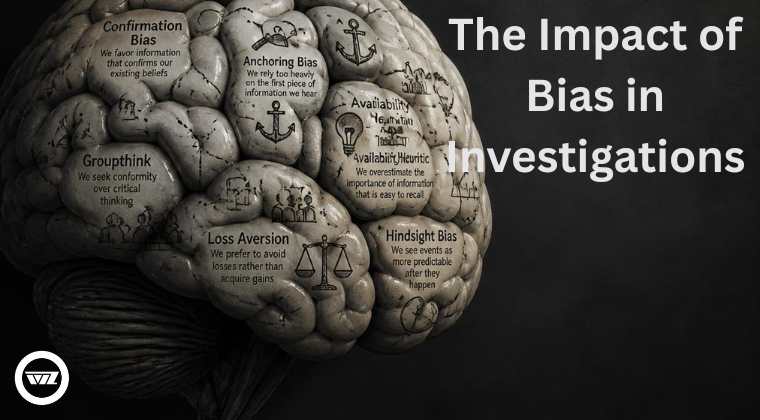
The Impact of Bias in Investigative Interviews
Learn how cognitive biases like confirmation bias and tunnel vision can lead to missed evidence, wrongful convictions, and miscarriages of justice—and discover proven techniques to eliminate them from your investigative process.
Your investigative instincts are valuable—but they can work against you. Cognitive biases are invisible forces that shape how we interpret evidence, question suspects, and build cases. Even the most skilled investigators can fall prey to confirmation bias, tunnel vision, and anchoring effects, often without realizing it.
This course pulls back the curtain on how biases operate in real investigations and, more importantly, how to stop them. You'll explore the types of biases most dangerous to investigative integrity, understand the psychological mechanisms behind them, and learn practical mitigation strategies that have been proven to work in the field.
Introduction to Motivational Interviewing
Learn the evidence-based techniques that help people find their own reasons to change. This technique assists in creating rapport that builds a foundation of trust necessary to work with individuals facing major decisions. Excellent for serious students and practitioners of the interviewing craft across multiple professions, and full of effective approaches to facilitating a productive conversation.
Motivational Interviewing is a collaborative, evidence-based approach that helps people find their own reasons to take action. Instead of telling someone what they should do, MI guides them to discover their own motivations, values, and commitment to transformation.
In this course, you'll explore the theoretical foundations that make MI so effective. You'll understand the psychology of change, learn why people resist, and discover how to use specific communication techniques to help them move forward—at their own pace.
Interviewing Neurodivergent Persons
The term "Neurodiverse" just refers to a brain that operates differently than the societal norm - not better or worse, just different. This doesn't necessarily impact the accuracy of memory, but may impact the way a person organizes and tells that story. In this course, investigators can learn evidence-based techniques to conduct fair, effective interviews that gives the individual the best opportunity to tell their truth.
Approximately 15-20% of the population possess some neurodiverse traits, and that number is likely an underestimation. Societal understanding and acceptance of neurodiversity, as well as advancements in diagnostic capability mean those numbers are on the rise. And given the fact that many neurodiverse traits are not readily apparent, it's not only likely that many investigators will interview more and more neurodiverse persons, they likely already have!
The Investigator's Mindset
Great investigations begin long before the first interview. Learn how to think like a disciplined investigator—challenge your assumptions, recognize cognitive traps, and build a repeatable framework that lets evidence—not hunches—drive your decisions.
You've been trained to find answers. But the best investigators know that the real skill is asking better questions—and knowing which evidence actually matters.
Most investigators jump straight to interviews with a theory in mind, then spend the rest of the investigation trying to prove it. That's backwards. The Investigator's Mindset flips the script.
This course challenges you to approach investigations as a disciplined process of reducing uncertainty, not proving a predetermined conclusion. You'll explore the characteristics of truly effective investigators, learn to recognize the cognitive traps that catch everyone, and master a reasoning framework that moves seamlessly between different investigative approaches.