

 Apple Podcasts
 Spotify
 Youtube Music
 iHeartRadio
 Amazon Music
 Podchaser
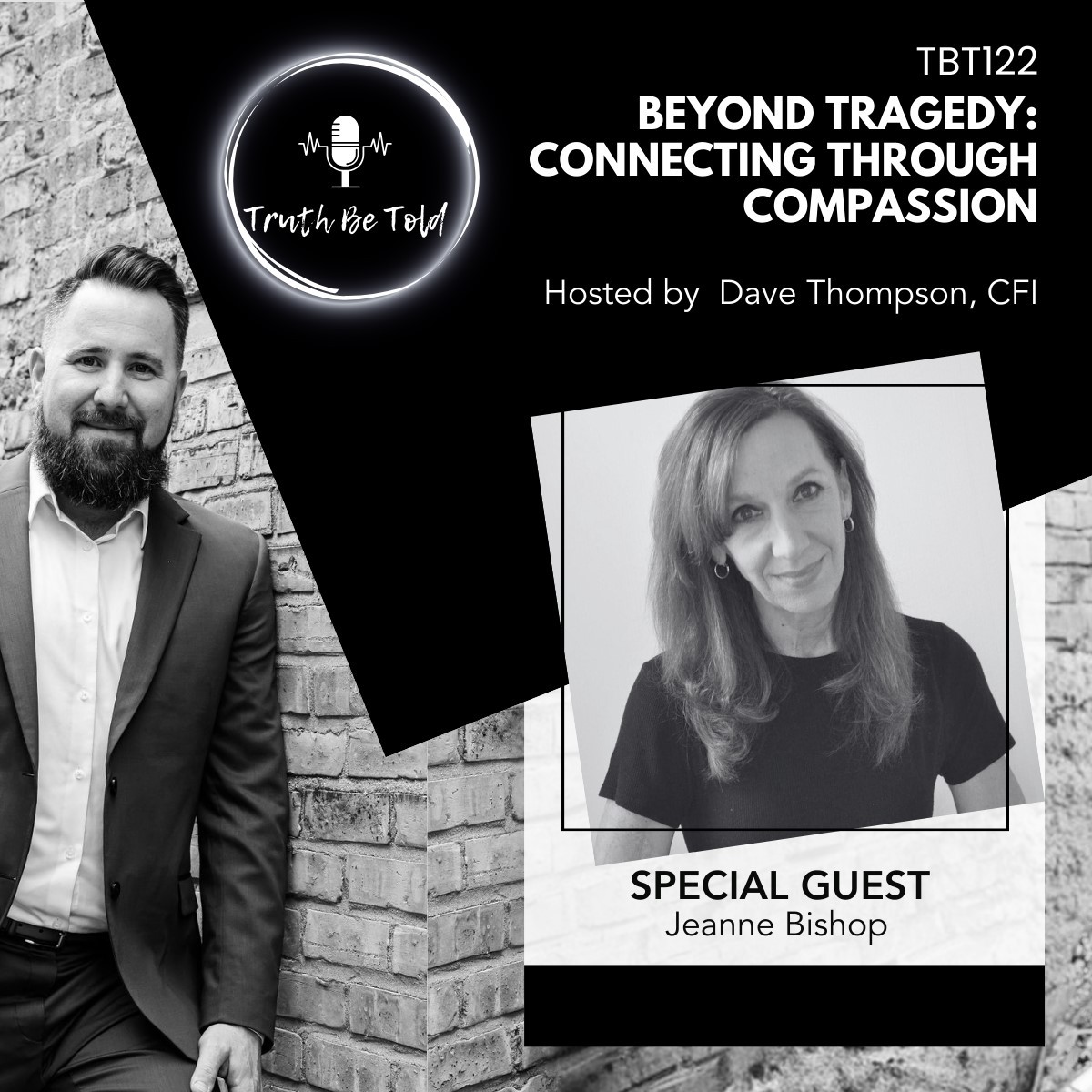
 Beyond Tragedy: Connecting through Compassion with Jeanne Bishop
If you were the victim of a crime, what would you want to happen to the person responsible?
How would you manage grief, anger and forgiveness?
In this episode of the Truth Be Told podcast, host Dave Thompson, a Certified Forensic Interviewer speaks with Jeanne Bishop about her personal tragedy and her journey towards forgiveness and advocacy against the death penalty. Jeanne is an author, a professor at Northwestern University School of Law and an attorney at the Cook County Public Defender's Office.
In this episode, Jeanne shares her story of losing her sister in a violent crime and how it shaped her views on justice and mercy. The conversation delves into the Oklahoma City bombing, her relationship with Bud Welch, father of Julie Welch - one of the victims of the horrific event. Jeanne also discusses the connection she formed with Bill McVeigh, the father of the bomber. Through their stories, Jeanne emphasizes the importance of compassion, understanding, and the power of communication in healing and reconciliation.
Truths:
- Anger is a natural response to loss, but it can be managed.
- Forgiveness does not mean forgetting; it means letting go of anger.
- Each person has their own timetable on processing grief and anger.
- Allowing somebody to share their story without judgement helps in obtaining reliable, genuine information.
- Communication is key to understanding different perspectives.
- Healing is a personal journey that varies for everyone.
- Empathy can bridge the gap between victims and perpetrators' families.
- Jeanne's work emphasizes the importance of victim advocacy.