
 Apple Podcasts
 Spotify
 Youtube Music
 iHeartRadio
 Amazon Music
 Podchaser
 The Wrong Question About Torture: Lessons of Guantanamo Bay
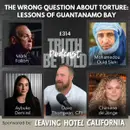
What happens when fear becomes policy—and the people labeled “the worst of the worst” are no longer treated as people?
In this episode of the Truth Be Told Podcast, host Dave Thompson, CFI explores the powerful story behind the documentary Leaving Hotel California and the complicated legacy of Guantanamo Bay, post-9/11 interrogations, enhanced interrogation techniques, torture, and the human consequences of abandoning evidence-based investigative practices.
Dave is joined by filmmakers Chimène de Jonge and Aybüke Demirel, former NCIS Special Agent Mark Fallon, and former Guantanamo detainee and Guantánamo Diary author Mohamedou Ould Slahi for a conversation about investigative interviewing, coercion, false information, cognitive bias, morality, forgiveness, and what happens when fear begins influencing the investigative process.
Inside Leaving Hotel California
The documentary Leaving Hotel California examines Guantanamo Bay through the experiences of the people who lived this history from dramatically different perspectives.
Chimène and Aybüke explain how a journalism project driven by their interest in human rights evolved into a documentary focused not simply on what happened at Guantanamo, but on the people behind the history. Their reporting led them to former government officials, investigators, intelligence professionals, attorneys, and detainees as they attempted to understand what actually happened—and why.
Mark Fallon: Fighting Torture From Inside the System
Mark Fallon offers a rare perspective from inside the U.S. government's response to September 11.
As a senior NCIS investigator involved in terrorism investigations after 9/11, Fallon describes watching interrogation practices evolve from legitimate investigative efforts toward coercive techniques and prisoner abuse. He discusses his attempts to challenge those practices, document what was happening, and warn government leadership about how history would ultimately judge the decisions being made.
The conversation also examines SERE — Survival, Evasion, Resistance and Escape — training and the controversial decision to adapt techniques designed to help U.S. personnel resist abusive treatment for use in interrogations.
Fallon explains the fundamental contradiction: techniques associated with increasing resistance and producing unreliable or false information were being adapted as methods for obtaining intelligence.
For investigators, law enforcement professionals, HR investigators, intelligence professionals, and anyone interested in science-based investigative interviewing, the lesson extends well beyond Guantanamo:
Pressure can produce compliance. That doesn't mean it produces reliable information.
Mohamedou Ould Slahi: The Human Being Behind the Label
Mohamedou brings the conversation from interrogation theory to lived experience.
He describes his detention, interrogation, sleep deprivation, abuse, and the psychological impact of being treated not as an individual, but as part of a category of people presumed to be dangerous.
But Mohamedou also challenges one of the most common debates surrounding enhanced interrogation:
Why is the question whether torture works? What if the more important question is whether torture is morally acceptable in the first place?
That distinction creates one of the most powerful moments of the episode and forces a broader conversation about ethics, investigative integrity, human rights, and what limits should exist even when investigators believe the stakes could not be higher.
Investigative Bias, False Information & the Danger of Certainty
The episode also explores how the fear and uncertainty following September 11 created conditions where confirmation bias, categorization, assumptions, and investigative tunnel vision could influence decision-making.
Fallon describes investigators being tasked not only with identifying people responsible for terrorism, but also with investigating evidence that could exonerate detainees who should not have been at Guantanamo in the first place.
It's a lesson that remains relevant to investigators today.
When investigators become committed to a conclusion before fully developing the information, the interview can shift from an effort to discover what happened into an effort to confirm what we already believe happened.
An Unexpected Friendship
Perhaps the most powerful part of Leaving Hotel California isn't about interrogation at all.
It's about the friendship that developed between Mark Fallon and Mohamedou Ould Slahi.
Their relationship began through books, virtual conversations, and shared discussions about Guantanamo before the filmmakers ultimately captured their first meeting in person. Fallon describes what drew him to Mohamedou simply: his humanity.
At the airport, Mohamedou greeted Mark with a sign inspired by the phrase displayed at Guantanamo, “Honor Bound to Defend Freedom.”
Mohamedou's version carried a different message:
“Bound to remain human.”
That idea becomes the thread running through the entire conversation.
Behind every investigation, accusation, intelligence report, interrogation, and headline is a human being.
And regardless of what someone is suspected of doing, investigators still have an obligation to remain objective, ethical, curious—and human.
In This Episode
Dave, Mark, Mohamedou, Chimène, and Aybüke discuss:
- The story behind the documentary Leaving Hotel California
- Guantanamo Bay and the U.S. response following September 11
- Mark Fallon's role investigating terrorism after 9/11
- Mohamedou Ould Slahi's experience at Guantanamo Bay
- Enhanced interrogation techniques and torture
- SERE training and its adaptation for interrogation
- Coercion, compliance, and false or unreliable information
- False confessions and the psychology of interrogation
- Confirmation bias and investigative tunnel vision
- Science-based and evidence-based investigative interviewing
- Ethics and morality in interrogation
- Human rights and the rule of law
- The importance of documenting and challenging investigative decisions
- Journalism and documentary filmmaking as forms of investigation
- Forgiveness, empathy, moral courage and humanity
- The friendship between Mark Fallon and Mohamedou Ould Slahi
Ultimately, this episode asks a question that extends far beyond Guantanamo Bay:
When the pressure is highest and we're most certain we're right, can we still remain curious enough to challenge our assumptions—and principled enough to remain human?
About Wicklander-Zulawski & Associates
The Truth Be Told Podcast is hosted by Dave Thompson, CFI, CEO of Wicklander-Zulawski & Associates (WZ).
For more than four decades, Wicklander-Zulawski has trained investigators around the world in investigative interviewing, workplace investigations, criminal investigative interviewing, rapport development, cognitive interviewing, interview strategy, and evidence-based approaches to obtaining reliable information.
WZ advocates for ethical, non-confrontational and science-informed interviewing practices designed to help investigators move beyond simply seeking admissions or confessions and instead focus on the real objective of an investigation: developing accurate and reliable information.
Through instructor-led programs and the Human Risk Academy powered by WZ, Wicklander-Zulawski provides training and professional development for law enforcement, corporate investigations, loss prevention and asset protection, human resources and employee relations professionals, and other investigators responsible for navigating high-risk human interactions.
Truth Be Told continues that mission through conversations with researchers, practitioners, investigators, leaders, journalists, advocates, and people whose experiences challenge us to think differently about how we investigate, how we communicate, and how we understand one another.

National Security Consultant / Author
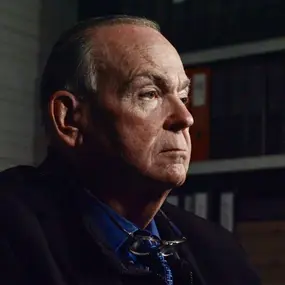
I spent more than 30 years in federal law enforcement and national security — 27 as a Naval Criminal Investigative Service (NCIS) special agent, capping my career in the U.S. Senior Executive Service. I investigated some of the most consequential terrorism cases in U.S. history, including the USS Cole bombing, and after 9/11 I led terrorism investigations that put me at the center of the government's internal fight over torture. I lost that fight. My book, Unjustifiable Means, is the story of why, and what it cost.
Today I split my time three ways:
Consulting. As Director of ClubFed, LLC, I advise on science-based, non-coercive interviewing, national security, and ethical leadership. I serve as a Strategic Advisor to iRecord, sit on the Steering Committee of Experts for the Méndez Principles on Effective Interviewing, and consult as an expert in interrogation and police practice.
Writing and speaking. I have written for The New York Times, The Washington Post, Newsweek, Just Security, and SpyTalk, among others, and lecture internationally on interrogation, ethics, and the rule of law. I'm a member of the Advisory Council at the University of Pennsylvania's Center for Ethics and the Rule of Law. I'm co-editor of two Oxford University Press volumes and a contributing author in the Rouledge International Handbook of Policing Crises and Emergencies. As well as co-editor and contributing author in Interviewing and Interrogation: A Review of Research and Practice Since World War II.
Storytelling. My experiences have found their … Read More
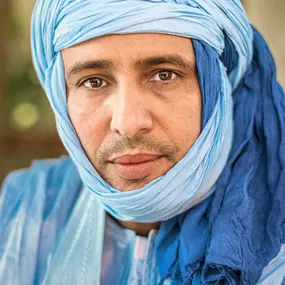
Keynote Speaker / Writer / Human Rights Advocate
Mohamedou Ould Slahi moves between worlds shaped by extremes: isolation and connection, injustice and reconciliation, silence and storytelling. Detained for fourteen years without charge in Guantánamo Bay, he endured conditions designed to break the human spirit. Yet from within captivity he chose a different path, one grounded in reflection, dignity and an unwavering belief in shared humanity.
His experience is not framed as a story of victimhood, but as an exploration of inner freedom. Mohamedou understands what happens to people and systems under pressure. He has lived through environments where power was absolute and accountability absent, and he speaks with rare clarity about the consequences of fear driven decision making, dehumanization and moral compromise.
At the same time, he embodies the possibility of reconciliation. Rather than allowing trauma to define him, he has become a global advocate for dialogue across divides. His bestselling memoir, Guantánamo Diary, written in captivity, demonstrates the transformative power of storytelling as a means of survival, resistance and meaning making.
In his lectures and conversations, Mohamedou connects personal experience to universal questions. How do we maintain our humanity under extreme stress? What does true leadership look like when authority is tested? And how can individuals and organizations cultivate resilience, empathy and ethical responsibility in complex environments?
With honesty, depth and moments of unexpected humor, he invites audiences to reflect on courage, accountabil… Read More