

 Apple Podcasts
 Spotify
 Youtube Music
 iHeartRadio
 Amazon Music
 Podchaser
 The Evolution of Non-Confrontational Interviewing with Dave Zulawski
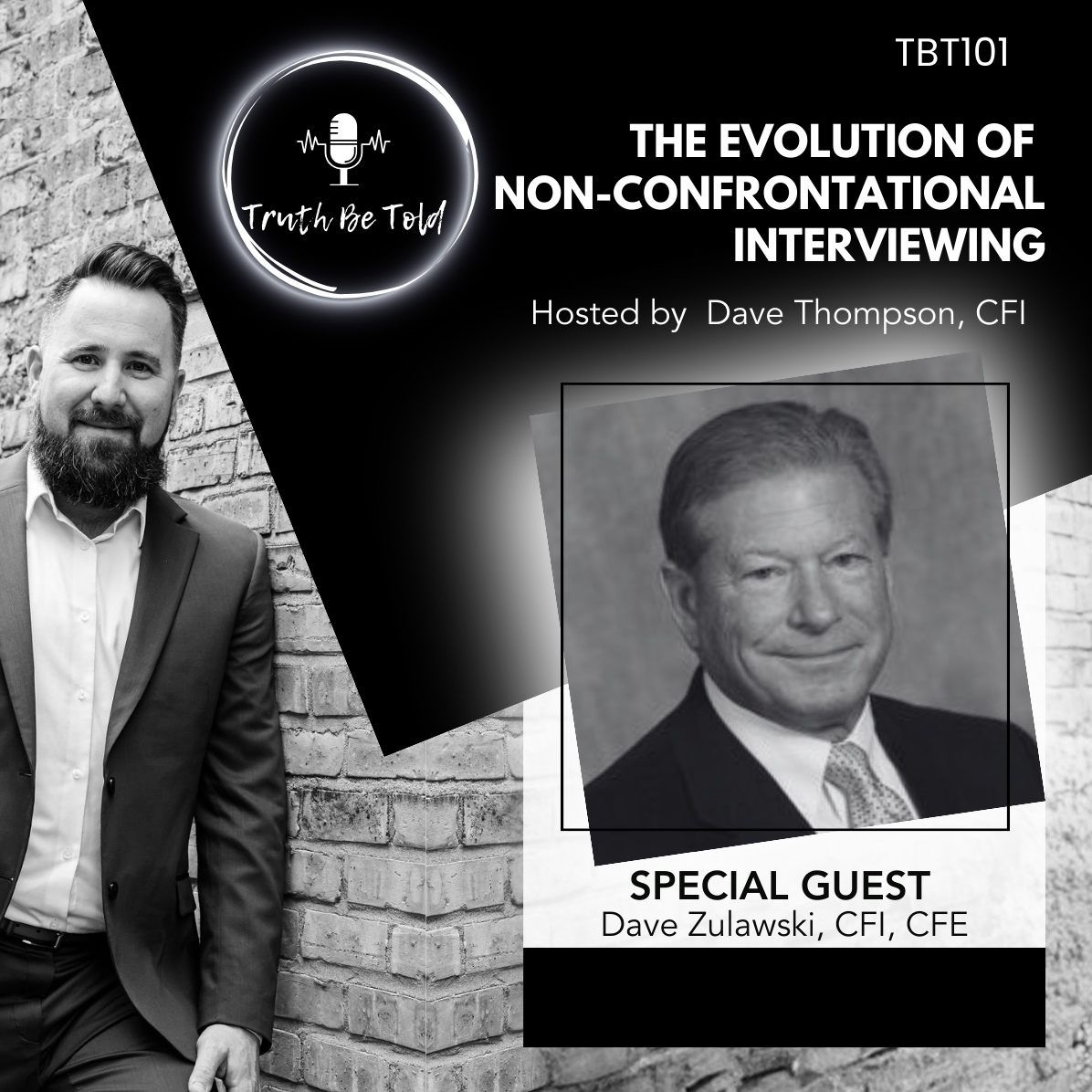
In this episode, Dave Zulawski, CFI, CFE and co-founder of Wicklander-Zulawski & Associates, shares insights and experiences from his career in interviewing and interrogation. He discusses the lack of training in these areas and the importance of effective communication skills. He emphasizes the need for flexibility in interviewing methods and the power of silence and active listening. Dave also highlights the value of recording interviews and how these skills can be applied in HR and hiring processes. He concludes by encouraging continual learning and self-evaluation in order to improve as an interviewer.
In this episode of the Truth Be Told podcast, we explore the importance of effective communication and how it can be improved. We discuss the role of active listening and empathy in communication, as well as the impact of non-verbal communication. We also address common communication barriers and how to overcome them. Finally, we touch on the topic of cultural differences in communication.
Truths:
- Effective communication is crucial in all aspects of life, including interviewing and interrogation.
- Flexibility in interviewing methods allows for better outcomes and adaptability to different situations.
- Active listening and the use of silence can lead to more meaningful conversations and better information gathering.
- Recording interviews provides valuable evidence, allows for review and feedback, and helps measure performance.
- Interviewing skills can be applied in various contexts, including HR and hiring processes.
- Continual learning and self-evaluation are essential for growth and improvement as an interviewer. Effective communication is crucial in all aspects of life, including personal relationships and professional settings.
- Active listening and empathy are key components of effective communication, allowing for better understanding and connection with others.
- Non-verbal communication, such as body language and facial expressions, can greatly influence the message being conveyed.
- Communication barriers, such as language barriers and distractions, can hinder effective communication, but can be overcome with awareness and effort.