


 Apple Podcasts

 Spotify

 iHeartRadio

 Amazon Music

 Podchaser

 YouTube
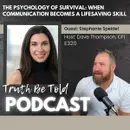
The Psychology of Survival: When Communication Becomes a Lifesaving Skill with Stephanie Speidel
Can communication save your life?
What happens to the brain during trauma?
And how can understanding human behavior help us recognize danger, de-escalate threats, and protect ourselves and others?
In this powerful episode of Truth Be Told, host Dave Thompson sits down with Stephanie Speidel, a licensed forensic clinician, kidnapping survivor, and threat assessment educator, to explore the psychology of survival and the extraordinary role communication plays in life-threatening situations.
Stephanie's story is unlike most. Drawing on her professional experience working with individuals convicted of serious crimes, she found herself relying on those very same skills when she was kidnapped at gunpoint. Throughout the ordeal, she used emotional regulation, behavioral awareness, empathy, and de-escalation techniques to help negotiate her survival.
Today, Stephanie combines her lived experience with her clinical expertise to help individuals and organizations better recognize threats, respond to escalating behavior, and understand the lasting psychological effects of trauma.
In this episode, we explore:
- The psychology of survival: How do people think, communicate, and make decisions when their lives are threatened?
- De-escalation and crisis communication: Can empathy, active listening, and emotional regulation help prevent violence?
- Threat recognition: What behavioral warning signs might indicate a dangerous or escalating situation?
- Trauma and memory: Why might survivors struggle to recall traumatic experiences chronologically, and why shouldn't inconsistencies automatically be interpreted as deception?
- Trauma-informed investigative interviewing: How can law enforcement, HR professionals, and investigators build trust and communicate more effectively with survivors?
- Workplace violence prevention: What can organizations, particularly those in healthcare, retail, and other public-facing industries, do to better prepare employees?
- The bystander effect: Why do people sometimes fail to intervene when witnessing a potentially dangerous situation?
Stephanie also introduces her Threat Read and Zero Weapon Protocol training models, designed to help people recognize behavioral threats and make more informed decisions during potentially dangerous encounters.
This conversation goes beyond a remarkable survival story. It's an exploration of human behavior, the impact of trauma, and why communication is more than a professional skill. Sometimes, it can be a lifesaving one.
Whether you're an investigator, law enforcement professional, HR leader, healthcare worker, mental health professional, or simply someone interested in psychology and human behavior, this episode offers valuable perspectives on how we understand, communicate with, and protect one another.
About Truth Be Told
Hosted by Dave Thompson, CEO of Wicklander-Zulawski & Associates (WZ) and Certified Forensic Interviewer (CFI), Truth Be Told explores the psychology of communication, investigative interviewing, interrogation, negotiation, leadership, and human connection through conversations with experts, researchers, and people with extraordinary lived experiences.
Subscribe to Truth Be Told for more conversations that will change your next one.

Forensic Clinician / Keynote / Speaker
Stephanie Speidel, LPC, LMHC, LPCCC, CEAP, NCC, CCMHC
Founder & Clinical Director, Genesis Mental Health, Inc.
Stephanie Speidel is a Licensed Professional Counselor with more than a decade of experience helping adults work through anxiety, trauma, life transitions, relationship challenges, and the kind of stress that builds quietly until it's hard to carry.
Her approach is warm, direct, and practical. She believes therapy works best when it feels like a real conversation, not a clinical exercise. Clients can expect to be heard without judgment, to understand the patterns keeping them stuck, and to leave with tools they can use in everyday life. She works at a pace that feels right for each person, because healing doesn't happen on someone else's timeline.
Stephanie specializes in trauma-informed counseling, anxiety, emotional regulation, and relationships. She is trained in the Gottman Method (Levels I and II) and is committed to in-person, face-to-face therapy.
Forensic and threat assessment work
Alongside her clinical practice, Stephanie has worked in forensic mental health and behavioral threat assessment since 2010 and has been licensed since 2013. Her work has included violence risk assessment, management of high-risk offenders, and crisis consultation with law enforcement and corporate security. She is the creator of The Threat Read™ and the Zero-Weapon Protocol™, two behavioral frameworks for recognizing and responding to threat, and she trains healthcare, education, law enforcement, and corporate security… Read More