

 Apple Podcasts
 Spotify
 Youtube Music
 iHeartRadio
 Amazon Music
 Podchaser
 The Truth behind Torture and Counterterrorism: Exploring Evidence-based Practices with Mark Fallon.
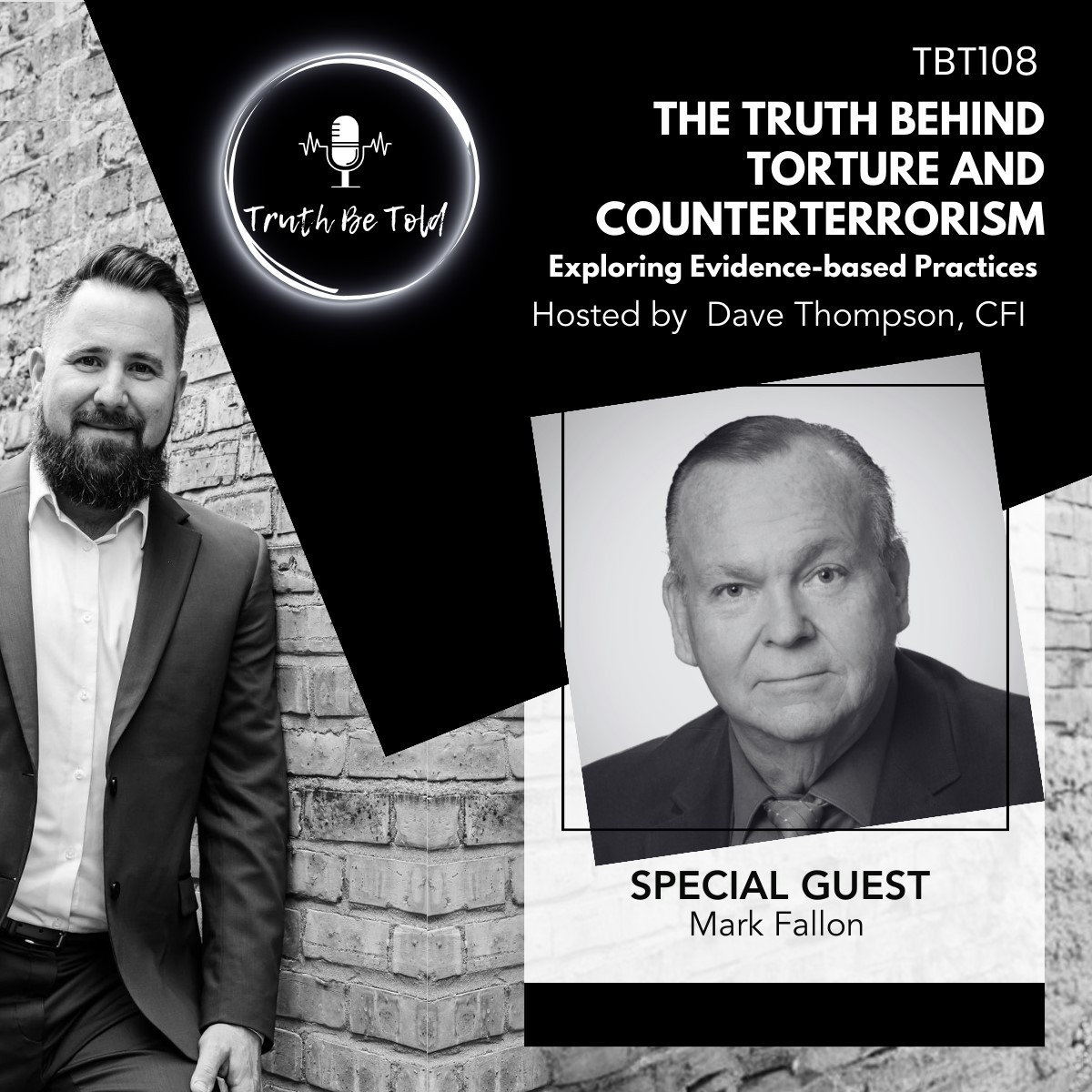
In this conversation, counterterrorism expert Mark Fallon discusses the evolution of interrogation techniques and the importance of building rapport in obtaining accurate and reliable information. Fallon provides insight from his experience in high-profile terrorism investigations including the USS Cole and World Trade Center bombings as well as interrogations at Guantanamo. He highlights the shift from confession-driven methodologies to relationship building techniques, emphasizing the role of empathy in high-pressure interrogations. Fallon also addresses the need for improved interview training in law enforcement and the recognition of inept practices that have led to miscarriages of justice. Overall, the conversation emphasizes the importance of effective and ethical interrogation practices in obtaining actionable intelligence. This conversation explores the consequences of interrogational abuses, the opposition to coercive methods, the need for research in interrogation, the importance of depressurizing the interrogation environment, and the integration of science into practice.
Truths
- Building rapport and treating suspects with respect is essential in obtaining accurate and reliable information during interrogations.
- Empathy is a crucial trait for interrogators, as it helps to establish trust and disarm resistance strategies.
- The shift from confession-driven methodologies to relationship building techniques has proven to be more effective in obtaining actionable intelligence.
- Law enforcement agencies need to prioritize interview training and embrace the body of research available in the psychological sciences to improve interrogation practices.
- Interrogational abuses can lead to unreliable information and intelligence.
- Opposing coercive methods is essential to protect human rights and uphold the constitution.
- Research plays a crucial role in improving interrogation practices.
- Depressurizing the interrogation environment can lead to more effective and truthful information.
- Integrating scientific knowledge into interrogation training can enhance effectiveness.
- Policing with virtue is a step towards community-embraced policing.

National Security Consultant / Author
I spent more than 30 years in federal law enforcement and national security — 27 as a Naval Criminal Investigative Service (NCIS) special agent, capping my career in the U.S. Senior Executive Service. I investigated some of the most consequential terrorism cases in U.S. history, including the USS Cole bombing, and after 9/11 I led terrorism investigations that put me at the center of the government's internal fight over torture. I lost that fight. My book, Unjustifiable Means, is the story of why, and what it cost.
Today I split my time three ways:
Consulting. As Director of ClubFed, LLC, I advise on science-based, non-coercive interviewing, national security, and ethical leadership. I serve as a Strategic Advisor to iRecord, sit on the Steering Committee of Experts for the Méndez Principles on Effective Interviewing, and consult as an expert in interrogation and police practice.
Writing and speaking. I have written for The New York Times, The Washington Post, Newsweek, Just Security, and SpyTalk, among others, and lecture internationally on interrogation, ethics, and the rule of law. I'm a member of the Advisory Council at the University of Pennsylvania's Center for Ethics and the Rule of Law. I'm co-editor of two Oxford University Press volumes and a contributing author in the Rouledge International Handbook of Policing Crises and Emergencies. As well as co-editor and contributing author in Interviewing and Interrogation: A Review of Research and Practice Since World War II.
Storytelling. My experiences have found their … Read More